
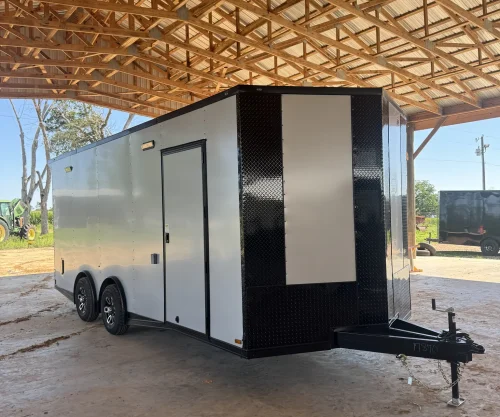
Choosing an enclosed trailer involves more than selecting a model that looks large enough for the job. Trailer dimensions, axle configuration and weight ratings directly affect how much cargo can be carried, how the trailer handles on the road and whether the tow vehicle can pull it safely.
People comparing Enclosed Trailers for Sale should understand these basic specifications before making a purchase. A trailer that is too small may limit productivity, while one that is too large or heavy can create towing, storage and fuel-efficiency concerns. Learning how size and weight ratings work can help buyers choose a practical model for both current and future needs.
Start With the Intended Cargo
The first step is identifying what the trailer will carry. Contractors may transport tools, generators and building materials, while landscapers may need room for mowers and compact machinery. Recreational users might carry motorcycles, ATVs, camping equipment or household belongings.
Buyers should measure the length, width and height of their largest items. It is also important to estimate the total cargo weight rather than considering dimensions alone. Heavy equipment may fit inside a compact trailer but exceed its safe payload capacity.
Allow extra space for
straps, shelving and safe movement. A trailer filled from wall to wall can make loading difficult and may prevent proper weight distribution.
Understand Exterior and Interior Dimensions
Trailer sizes are commonly described by width and length, such as 6-by-12 or 8.5-by-20 feet. These figures usually refer to the general body dimensions, but usable interior space may be slightly different because of wall thickness, wheel wells and structural components.
Interior height is especially important when transporting tall equipment or planning to work inside the trailer. Additional height may be useful for mobile workshops, concession setups or cargo that cannot be tilted during loading.
Door dimensions should also be checked carefully. Equipment may fit inside the trailer but still be too wide or tall to pass through the rear ramp or side door. Buyers should compare cargo measurements with the actual door opening, not only the overall trailer width.
Compare Single-Axle and Tandem-Axle Trailers
Single-axle trailers have one axle and are generally lighter, easier to maneuver and simpler to store. They are commonly used for lighter loads, local trips and occasional hauling. Their lower empty weight may also make them suitable for tow vehicles with modest towing capacities.
Tandem-axle trailers have two axles and are usually selected for heavier cargo, frequent travel and larger trailer sizes. Two axles help distribute weight across more tires and may provide greater stability on highways.
However, tandem-axle models are typically heavier and may require a more capable tow vehicle. The best option depends on cargo weight, travel frequency, road conditions and available storage space.
Learn the Meaning of GVWR
Gross Vehicle Weight Rating, commonly called GVWR, is the maximum safe weight of the trailer when fully loaded. This total includes the empty trailer, cargo, tools, fuel, equipment and any installed accessories.
For example, if a trailer has a GVWR of 7,000 pounds, the combined weight of the trailer and its contents must remain below that limit. GVWR should never be treated as the amount of cargo the trailer can carry.
Exceeding the rating can place excessive pressure on the frame, axles, tires, suspension and braking system. It may also reduce control and increase stopping distance.
Calculate Payload Capacity
Payload capacity is the amount of cargo a trailer can safely carry. It is calculated by subtracting the empty trailer weight from the GVWR.
A trailer with a GVWR of 7,000 pounds and an empty weight of 2,200 pounds would have an approximate payload capacity of 4,800 pounds. Added features such as cabinets, air-conditioning systems, generators and reinforced flooring can increase the empty weight and reduce the available payload.
Buyers comparing Enclosed Cargo Trailers for Sale should request accurate weight information for the specific model and configuration. Estimates may not reflect optional equipment or custom upgrades.
Match the Trailer to the Tow Vehicle
The tow vehicle must be able to handle the loaded trailer safely. Owners should check the manufacturer’s towing capacity, hitch rating, payload limit and Gross Combined Weight Rating.
Tongue weight also matters. This is the downward force placed on the hitch by the trailer. Too little tongue weight may cause swaying, while too much can overload the rear suspension and reduce steering control.
Trailer brakes, brake controllers and properly rated hitches may be necessary depending on trailer weight and local regulations. Buyers should verify these requirements before towing.
Plan for Balanced Loading
Cargo should be distributed evenly, with heavier items positioned low and secured firmly. Concentrating too much weight at the rear can increase sway, while placing excessive weight at the front can overload the hitch.
Tie-down points should be strong enough for the cargo being carried. Loads must be checked during longer trips because straps may loosen as equipment shifts.
Conclusion
Understanding trailer size, axle configuration, GVWR and payload capacity is essential before making a purchase. These specifications influence towing safety, cargo space, road stability and long-term usability.
Buyers should measure their equipment, calculate expected cargo weight and confirm tow-vehicle limits before selecting a model. A trailer chosen through careful planning is more likely to handle daily work safely, provide room for future needs and remain useful for many years.
