Diamond stud earrings are one of those rare jewelry purchases that feel instantly “right.” They work with a white tee and jeans, they look polished with office wear, and they hold their own next to an engagement ring without competing for attention. Under $500, you can absolutely get a pair you’ll love—especially if you understand which specs matter most, where you can compromise safely, and how to read a listing like a jeweler instead of a browser.
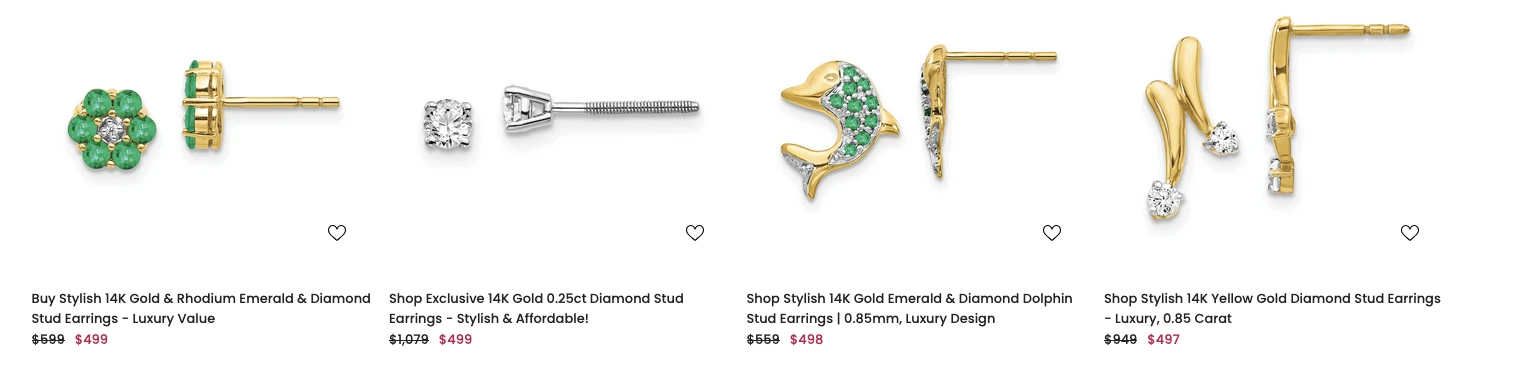
This guide walks you through the smartest ways to buy diamond studs under $500, what to prioritize (and what to ignore), and the best “types” of studs to target based on your style and daily life.
What “under $500” realistically buys you in diamond studs
At this budget, most diamond studs fall into a few common categories:
1) Smaller natural diamonds with solid settings.
Think classic, dainty studs that are brilliant and wearable every day. Many people prefer this route because the stones have the traditional diamond identity and resale recognition.
2) Lab-grown diamonds with larger visual size.
Lab diamonds are chemically and optically the same material as mined diamonds, and the pricing usually gives you more carat weight and/or better clarity for the money. Under $500, lab studs can look noticeably larger than natural studs at the same price.
3) Cluster or “illusion” studs that look bigger than the carat weight.
Clusters are multiple small diamonds arranged to mimic one larger stone. Illusion settings use metalwork to visually expand the face-up look. They’re a great choice if you care more about appearance than “one stone per ear.”
4) Single-diamond studs with modest grades but strong sparkle.
You can sometimes find studs with lower clarity or warmer color that still look bright—especially in yellow gold.
The key is choosing which of these is “best” for your priorities: maximum sparkle, maximum size, maximum durability, or maximum timelessness.
The 4C priorities that matter most for studs (and how to use them)
People love to debate the 4Cs (cut, color, clarity, carat), but for diamond studs, the hierarchy is pretty clear.
1) Cut: the sparkle engine
Cut quality has the biggest impact on how lively a diamond looks. Even small studs can look “wow” if they’re cut well, and even bigger stones can look dull if the cut is mediocre. In plain terms: always prioritize cut.
What to aim for:
-
For round diamonds, look for Excellent or Very Good cut (when that information is provided).
-
If cut grade isn’t listed, look for good symmetry and a bright, crisp look in photos/video.
Studs are viewed from arm’s length and in motion, so brilliance matters more than microscopic perfection.
2) Color: less critical than you think
For stud earrings, color sensitivity is lower than for rings because earrings sit farther from the eye and often reflect hair, skin tone, and ambient light.
Smart ranges:
-
White gold / platinum look: aim for G–I if possible; J can still look fine in smaller sizes.
-
Yellow gold: you can comfortably go H–J or even K in some cases, because the warm metal makes the diamond appear whiter.
If you’re choosing between slightly warmer color and better cut, choose the better cut.
3) Clarity: don’t overpay for “flawless”
Most clarity characteristics are invisible without magnification, especially in studs. Under $500, the goal is “eye-clean,” not perfection.
Good clarity targets:
-
SI1–SI2 is often the value sweet spot.
-
I1 can be okay if the inclusions don’t affect transparency or sparkle, but it’s riskier.
If you can’t confirm eye-clean, clarity becomes a gamble. Better to go slightly smaller with safer clarity.
4) Carat: size is fun, but balance is everything
Carat weight is a number; visual size is what you actually see. Two diamonds with the same carat can look different depending on cut proportions. Under $500, you’ll usually be shopping in 0.20–0.60 total carat weight (TCW) depending on natural vs lab and the brand.
A practical “everyday” visual target for many people is:
-
0.25–0.50 TCW for natural diamonds (often depends on grades and setting).
-
0.50–1.00 TCW for lab diamonds (sometimes possible with smart shopping).
The setting is not “just the metal” — it’s the safety system
In diamond studs, the setting matters almost as much as the diamond. You wear these constantly, so durability is non-negotiable.
Best setting styles under $500
3-prong martini
A sleek, modern look that sits closer to the ear and feels secure when done well. It can look slightly larger because less metal is visible.
4-prong basket
The classic. Very secure, easy to clean, and great for daily wear.
Bezel
A metal rim surrounds the diamond. Most secure and very modern; also helps slightly warm diamonds look whiter. Bezel studs can look a touch smaller because you see more metal—unless the design is well-proportioned.
Halo or illusion
Halo uses small diamonds around the center; illusion uses metalwork to enlarge the look. Great for “bigger” appearance. If you choose this style, prioritize craftsmanship so it doesn’t look flimsy.
Backings: pick comfort and safety
The backing is where many budget studs quietly fail.
-
Screw backs: very secure, great if you’re forgetful or active; slightly slower to put on.
-
Push backs (friction): convenient but can loosen over time.
-
La Pousette / guardian backs: premium safety feel; not always available under $500.
If you plan to wear studs daily, security is worth prioritizing even if it means a slightly smaller diamond.
The “best” diamond stud earrings under $500: top categories to shop
Instead of listing brand names, the most useful approach is to focus on the best types of studs you can confidently buy under $500 and why they win.
1) Best classic everyday studs: round brilliant, 4-prong basket, 0.25–0.40 TCW
If you want one pair that never feels wrong, this is it. Round brilliants maximize sparkle, and the basket setting is sturdy and timeless.
Who this is best for:
-
First diamond stud purchase
-
Minimalists
-
People who want “real diamond look” without flashiness
How to shop it:
-
Prioritize cut and eye-clean clarity.
-
White metal (white gold) gives a crisp, bright look.
-
Choose screw backs if you want worry-free daily wear.
2) Best “looks bigger than it is” studs: cluster or illusion face
If your main goal is presence—something that reads like a larger stone from normal distance—cluster/illusion styles are your best friend under $500.
Why it works:
-
Multiple small diamonds can create a larger overall diameter.
-
The sparkle can be intense because there are many facets reflecting light.
Watch-outs:
-
Quality varies a lot. You want a clean, symmetrical face and secure prongs.
-
Cleaning matters because small stones can trap oils and reduce sparkle.
Who this is best for:
-
People who like a noticeable stud
-
Special occasion wearers
-
Anyone who wants “big look, smart budget”
3) Best for sensitive ears: bezel-set studs in 14k gold
If your ears are sensitive, snagging, or you wear studs in bed, bezel is a top pick.
Why it’s great:
-
Smooth edges, no prongs catching on sweaters or hair.
-
Very secure for smaller stones.
Style note:
-
Bezel studs feel modern and slightly “designer.”
-
Yellow gold bezel can make warmer diamonds look creamy and intentional.
4) Best for maximum size: lab-grown round studs around 0.70–1.00 TCW (when available)
If you want a bigger, brighter look under $500, lab-grown is usually the path. For studs, lab diamonds can be an especially good value because you’re not chasing a single center stone “statement” the way you might with a ring.
Who this is best for:
-
Size-focused buyers
-
People upgrading from tiny studs
-
Those who want higher clarity/whiter color at the same budget
How to shop it:
-
Still prioritize cut; a big dull diamond won’t impress.
-
Make sure the setting is strong—bigger stones need better engineering.
5) Best for warm, flattering glow: natural diamonds in yellow gold, H–J color range
If you like a softer, warmer vibe (and often it looks amazing on Mediterranean/olive skin tones), yellow gold studs with slightly warmer diamonds can look luxurious rather than “budget.”
Why it’s a smart budget play:
-
You can accept lower color grades without the stones looking tinted.
-
Yellow gold is durable, classic, and pairs well with other jewelry.
Shape choices: why round is usually best under $500
Under $500, round brilliant is usually the safest shape because it hides inclusions and color better and returns the most light. Other shapes can be beautiful, but they may demand higher color/clarity to look equally crisp, which can push you over budget.
That said:
-
Princess cut studs can look sharp and modern, sometimes with good value.
-
Cushion can look romantic but may appear smaller for the same carat.
-
Oval/pear in stud form can look stylish, but matching pairs can be trickier.
If you want a no-regrets purchase: round.
The two biggest mistakes people make when buying budget diamond studs
Mistake #1: Overpaying for clarity you can’t see
It’s easy to get seduced by higher clarity labels, but studs are viewed from a distance. Put your money into cut and setting quality first.
Mistake #2: Ignoring the backing and post quality
Thin posts, weak friction backs, or poorly fitted screw backs can turn a “good deal” into a lost earring. Under $500, always verify:
-
Metal purity (14k gold is a strong standard)
-
Secure back type
-
Return or warranty terms (even if you’re not clicking a link here, it should exist)
How to tell if studs will look “bright” from photos (without a gemologist)
When listings don’t include perfect details, you can still make smart choices. Look for:
-
Clear, crisp reflections (not gray or glassy look)
-
Symmetry in the diamond patterning
-
Even, well-matched stones between left and right
-
Prongs that look secure and evenly placed
-
A setting that doesn’t overwhelm the diamond face
If the photos look dull or the stones look mismatched, skip them.
A simple “best choice” checklist for studs under $500
If you want the cleanest decision path, use this:
-
Choose your goal: everyday classic, bigger look, maximum size, or ultra-secure/comfort
-
Pick the best style match:
-
Everyday classic → round + 4-prong basket
-
Bigger look → cluster/illusion
-
Maximum size → lab-grown rounds
-
Comfort/security → bezel + strong backings
-
Prioritize:
-
Cut quality (or sparkle in visuals)
-
Secure setting and reliable backing
-
Eye-clean clarity
-
Color that matches your metal choice
-
Pick a size you’ll truly wear:
-
If you’re new to studs, smaller can feel more “you” and get worn more often.
-
If you already wear studs daily, upgrading size can feel like a huge luxury.
Final recommendation: what’s “best” for most buyers
If you want the best all-around option under $500, the most consistently satisfying choice is:
Round brilliant diamond studs in a sturdy 14k gold basket setting with secure backs, prioritizing cut and eye-clean clarity over high clarity grades.