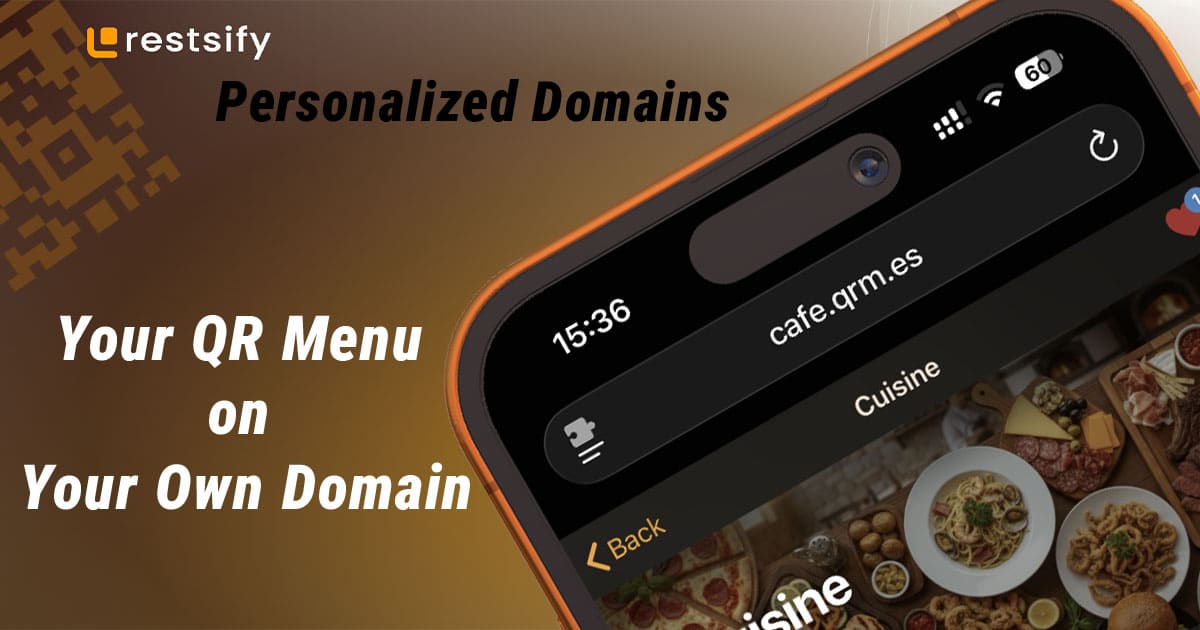
Digital menus have become a standard tool for restaurants, but the way those menus are accessed plays a critical role in brand perception and customer trust. Instead of using long, generic QR links, many modern restaurants are adopting personalised menu domains that are short, memorable, and directly associated with their brand identity.
A personalised domain transforms a digital menu from a simple utility into a branded experience. When guests scan a QR code and see a clean, meaningful address such as cafe.menu.ooo, bistro.qr9.app, or winebar.carta.wine, the menu instantly feels more professional and trustworthy. These short domains are easy to recognise, easy to remember, and visually appealing on printed materials, table tents, and takeaway packaging.
From a practical standpoint, custom menu domains significantly improve usability. Short URLs reduce scanning errors, load faster, and are easier to communicate verbally or visually. Restaurants can also reuse the same domain across multiple touchpoints — menus, Google Maps, social media profiles, and printed signage — creating a consistent digital presence.
Modern digital menu platforms allow restaurants to choose from a wide range of short domains and configure subdomains for each venue or concept. This approach makes it possible to create addresses like coffee.builder.menu or pizza.menu.eu.com without the complexity and cost of managing traditional domain infrastructure. Learn more about how personalised menu domains for restaurants work and what options are available for different business needs: Personalised menu domains for restaurants.
Branding benefits extend beyond appearance. A custom domain reinforces ownership and independence, helping restaurants avoid the impression that their menu is hosted on a third-party platform. Guests associate the menu directly with the venue, which builds confidence and strengthens brand recall — an important factor in competitive hospitality environments.
Personalised domains also integrate seamlessly with other digital menu features. Whether combined with analytics, multilingual content, or dynamic pricing, the domain remains stable while the underlying menu evolves. Restaurants can update prices, descriptions, or availability instantly without changing printed QR codes or links.
For businesses operating in tourist areas or serving international guests, custom menu domains work particularly well alongside multilingual digital menus. A single branded address can automatically adapt content to the visitor’s language, creating a smooth and intuitive experience. Discover how multilingual digital menus for international guestscomplement personalised domains and improve accessibility across diverse audiences: Multilingual digital menus for international guests.
Scalability is another advantage of using personalised menu domains. Restaurant groups and franchises can maintain consistent branding while assigning unique subdomains to each location. This structure simplifies management and ensures that every venue benefits from the same performance and security standards.
To see how personalised domains fit into a broader digital menu ecosystem — including design templates, analytics, and performance optimisation — many hospitality professionals explore complete digital menu platform features for restaurants that unify all components into a single system: Digital menu platform features for restaurants.
As digital dining experiences continue to evolve, personalised menu domains are becoming more than a branding detail. They represent a strategic shift toward ownership, clarity, and professionalism in how restaurants present their menus online.