Plastic injection molding services have become the backbone of global manufacturing, delivering precision, speed, and cost efficiency that few other processes can match. Whether you’re creating a simple consumer product or a complex engineering component, injection moulding offers the consistency and scalability needed for modern mass production.
Today, companies across automotive, medical, electronics, packaging, and consumer goods rely on injection moulding to produce high-quality plastic parts with tight tolerances.
This article provides a full overview of what plastic injection moulding involves, how the process works, and why it remains the preferred manufacturing choice for so many industries.
Understanding Plastic Injection Moulding Services
Plastic injection moulding services cover the full manufacturing cycle of transforming raw polymer pellets into finished plastic components. A complete service typically includes:
-
Product design and engineering review
-
Mould fabrication and tooling development
-
Material selection and testing
-
Injection moulding production
-
Quality assurance and inspection
-
Finishing, assembly, and customised packaging
With a capable supplier, you receive a streamlined experience from concept to final shipment, ensuring parts meet both performance and aesthetic requirements.
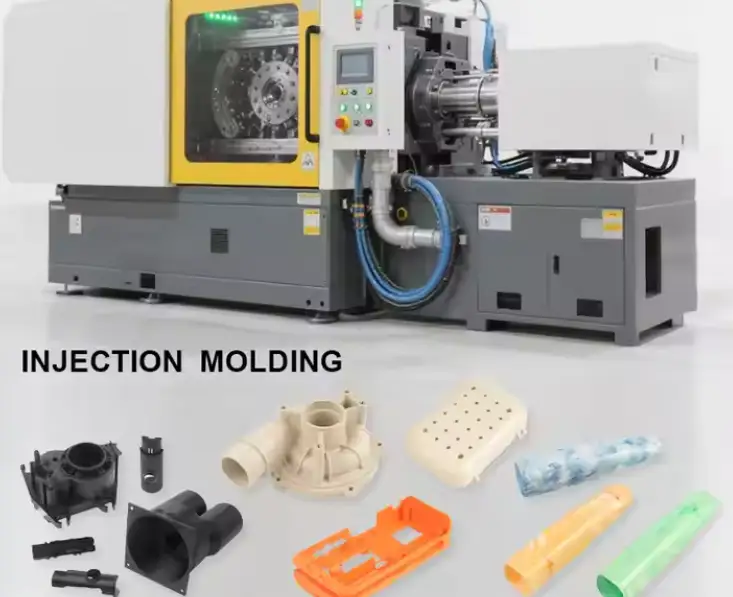
How the Injection Moulding Process Works
The injection moulding process combines heat, pressure, and precision machining to form plastic parts at high speed. Although the system is technically advanced, the basic steps remain straightforward:
1. Design & Tooling Preparation
Your design is evaluated for manufacturability. Engineers adjust features like draft, thickness, support ribs, and parting lines to ensure smooth moulding. After design approval, the mould (or “tool”) is manufactured using steel or aluminium. This mould forms the exact cavity shape of the finished product.
2. Material Selection
Thermoplastics such as ABS, PP, PC, PE, nylon, POM, and TPU are among the most common materials. Engineering-grade resins with fibre reinforcement, flame retardants, or UV resistance can also be used depending on the application.
3. Injection
Plastic pellets are heated to a molten state and injected into the mould cavity at high pressure. Modern machines monitor injection speed, temperature profiles, and holding pressures to ensure each cycle produces the same quality part.
4. Cooling
As the plastic cools, it solidifies into the desired shape. Cooling time varies depending on part thickness, resin type, mould temperature, and cavity complexity.
5. Ejection
Once the part is fully cooled, ejector pins push it out of the mould, and the cycle begins again. For high-volume production, this can happen every few seconds.
6. Finishing & Packaging
Depending on customer needs, parts may undergo trimming, surface treatment, pad printing, ultrasonic welding, or assembly before packaging.
This level of efficiency makes injection moulding the ideal solution for producing stable, repeatable components in large quantities.
Key Advantages of Plastic Injection Moulding Services
Injection moulding remains unmatched for efficiency and precision. Below are the benefits that make it a top choice across industries:
✔ High Production Efficiency
Once the mould is ready, injection moulding provides extremely fast cycle times. Factories can produce thousands—or even millions—of parts with consistent quality.
✔ Excellent Repeatability
Because the mould is fixed, every cycle produces parts almost identical to the previous one. This is especially important for tight-tolerance applications in automotive and electronics.
✔ Wide Material Selection
Manufacturers can choose from standard plastics or advanced resins tailored for:
-
Heat resistance
-
Chemical resistance
-
Flexibility
-
Impact strength
-
UV stability
-
Food-grade compliance
This versatility makes injection moulding suitable for both everyday products and specialised engineered components.
✔ Low Cost Per Unit
Although tooling may represent a significant upfront investment, the per-piece cost becomes extremely low at higher volumes, making injection moulding one of the most cost-effective mass production methods.
✔ Superior Surface Quality
The mould surface can be polished, textured, or engraved to achieve the exact look you want—glossy, matte, brushed, or patterned. Many parts come out finished without additional treatment.
✔ Strength, Stability, and Durability
Injection moulded components can withstand mechanical stress, environmental exposure, and long-term use. This is why industries requiring safety and reliability rely on this process.
Industries That Rely on Injection Moulding
The versatility of injection moulding has made it essential in nearly every industry. Common applications include:
Consumer Products
-
Storage boxes
-
Appliance parts
-
Toys
-
Home décor
-
Packaging items
Automotive
-
Interior trims
-
Dashboard components
-
Wiring clips and brackets
-
Engine compartment parts
Medical & Healthcare
-
Device housings
-
Disposable syringe components
-
Diagnostic tool parts
Electronics
-
Enclosures for devices
-
Connectors
-
Switch components
Industrial Applications
-
Gears
-
Spacers
-
Structural parts
-
Custom housings
From small precision parts to large structural components, injection moulding covers a wide range of product requirements.
Choosing the Right Injection Moulding Service Provider
Selecting a capable moulding supplier can significantly influence the success of your project. Here are the essential factors to consider:
1. Engineering Capabilities
A supplier with strong engineering experience can optimise your design, preventing defects such as warping, sink marks, or short shots.
2. Tooling Quality
High-quality moulds last longer, reduce downtime, and produce better parts. Look for suppliers with CNC machining, EDM, and precision toolmaking experience.
3. Machine Range
Choose a partner with injection moulding machines suitable for your part size, from micro moulding to large components.
4. Quality Control
Reliable manufacturers use techniques such as:
-
CMM measurement
-
Vision inspection
-
Resin batch testing
-
Dimensional checks at every shift
This ensures consistent performance during mass production.
5. Production Capacity
For large orders, stable supply and predictable lead times are crucial. A partner with automated systems, assembly lines, and scalable production will reduce risk.
6. Full-Service Support
If you need help with product development, mould modifications, or assembly, a full-service supplier offering OEM/ODM can streamline your entire project.
Why Injection Moulding Remains a Cornerstone of Manufacturing
As industries move toward lighter, more durable, and more cost-efficient products, injection moulding continues to provide unmatched advantages. Its combination of speed, precision, and material diversity allows manufacturers to develop high-performance parts at competitive prices.
From rapid prototyping to large-scale deployment, injection moulding offers a reliable pathway to bring products to market quickly and efficiently.
Conclusion
Custom plastic injection molding services provide an end-to-end solution for creating consistent, durable, and high-quality plastic components. Whether you’re producing everyday consumer items or highly engineered industrial parts, injection moulding delivers the precision and scalability needed to compete in today’s fast-moving markets.
By working with a reliable moulding partner, you gain access to expert engineering, advanced machinery, robust quality control, and efficient mass production—all essential elements for successful product manufacturing.